Create one comparison brief
A useful quotation comparison starts with a shared product specification. Give each supplier the same current brief, quantity breakdown and delivery requirements. Identify the version used for pricing and ask suppliers to list any assumptions or proposed alternatives in their response.
Set up a comparison sheet with one column for each quotation. Record the currency, unit of measure, quotation date and validity. This creates a place to collect differences and follow-up questions before you decide which proposal fits the order.
Check the material specification
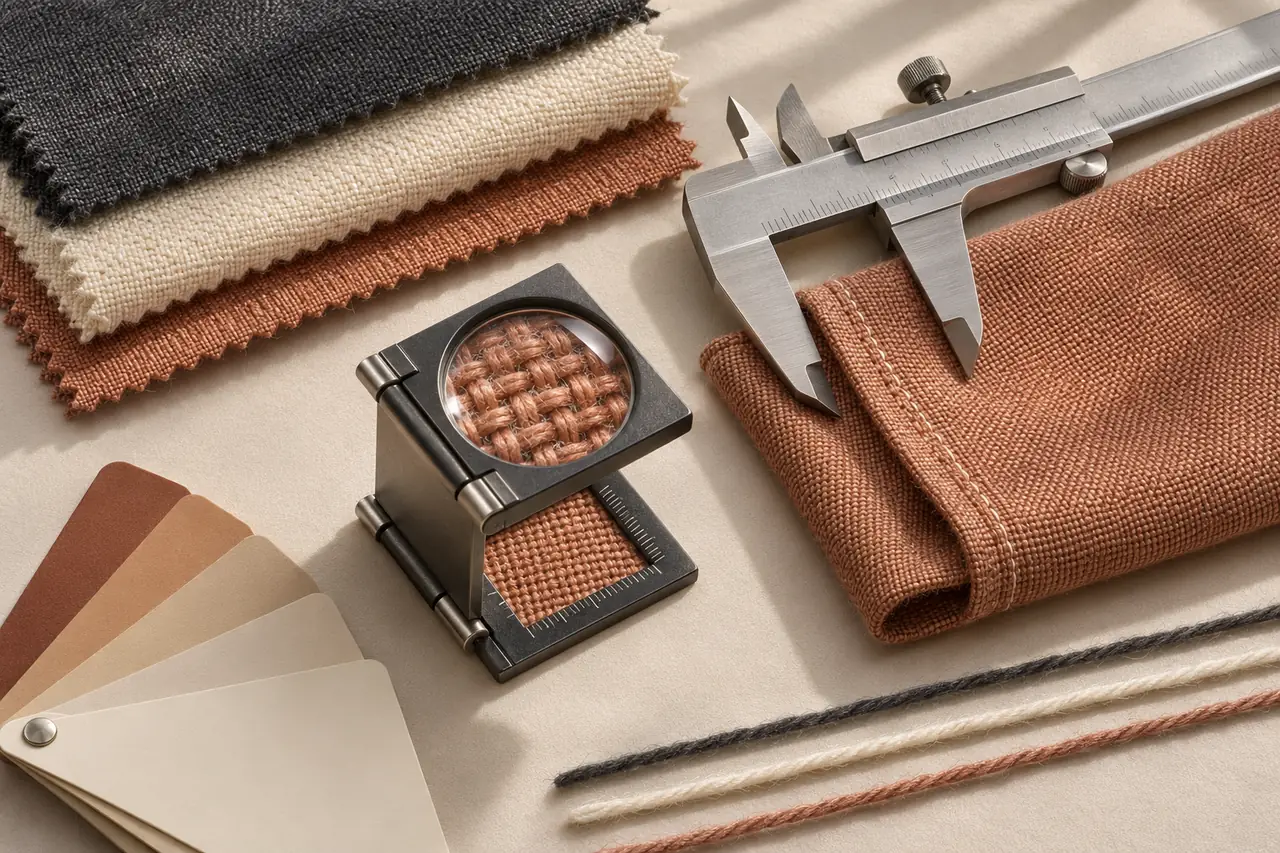
Compare composition, construction, weight, width and finish wherever these apply to your product. For garments, include the main fabric, linings, rib and other material components. Ask for the quoted material reference to be identified so you can connect it with the sample you review.
List any organic or recycled fibre percentage and the claim being offered. Ask which sources and processing stages the supplier can identify and what records are available. Price alternatives separately and compare their suitability, appearance and evidence against the same brief before approving a substitution.
Match construction and finishing details
Review the construction details included in each proposal. Garment quotations should address the specified seams, closures, pockets, decorative work and trims. Home-textile quotations should identify dimensions, edge finishes, set contents and any decorative requirements relevant to the brief.
Include the finishing or wash reference and the intended care instructions. Compare proposed durability checks, such as washing, dimensional stability, pilling or abrasion, using the same methods and acceptance criteria. Ask what testing is included and which results still need confirmation during sampling.
Understand quantity and price assumptions
Check whether the quotation uses your requested breakdown by style, colour, size or dimension. Ask suppliers to state minimum quantities, material commitments and any price changes at different order volumes. Confirm how a revised quantity would affect the quoted terms.
Keep the price unit explicit. A fabric price may be quoted using a different unit from another proposal, while a set price needs a clear list of included pieces. Ask for a common basis of comparison and record any conversion assumptions.
List the included and additional costs
Request a breakdown of included costs and additional charges, including testing and claim verification. Compare packaging materials, dimensions, packing ratios and protection on the same basis. Ask for evidence behind packaging content claims and consider whether unnecessary inserts or layers can be removed.
Keep sample charges and development costs visible, including any conditions attached to them. Confirm the payment schedule, quotation validity and the circumstances in which the proposal may need to be revised before you approve the commercial terms.
- Materials, trims and product finishing
- Samples and development requirements
- Testing and inspection arrangements
- Labels, packaging and carton requirements
- Shipping and other agreed charges
Review timing, evidence and responsibilities
Compare the proposed stages for sampling, approval, material preparation, production and shipment. Identify which dates depend on your feedback or another unresolved decision. Confirm the delivery destination and how shipping arrangements and responsibilities are addressed in each proposal.
Compare the evidence behind each claim. For Textile Exchange standards, a scope certificate identifies a supplier's certified activities. Transaction certificates or verified eTransactions connect certification to products sold or shipped. Confirm which applicable records will accompany your order, and authenticate them through the scheme's designated service.
Close the open questions before approval
Send a consolidated list of questions and ask for an updated quotation when specifications or commercial terms change. Keep the approved proposal connected to the final brief and sample references so the order has a clear written basis.
AMA Sourcing offers costing and negotiation support as part of its textile buying-house services. Share your product brief and the details you want clarified so the discussion can address specification, quantities, price scope and the requirements of your proposed order.